Why Dental Clinics Need Specialized Cleaning (And What Standard Cleaning Lacks)
- Post By
- Wednesday
January 28, 2026

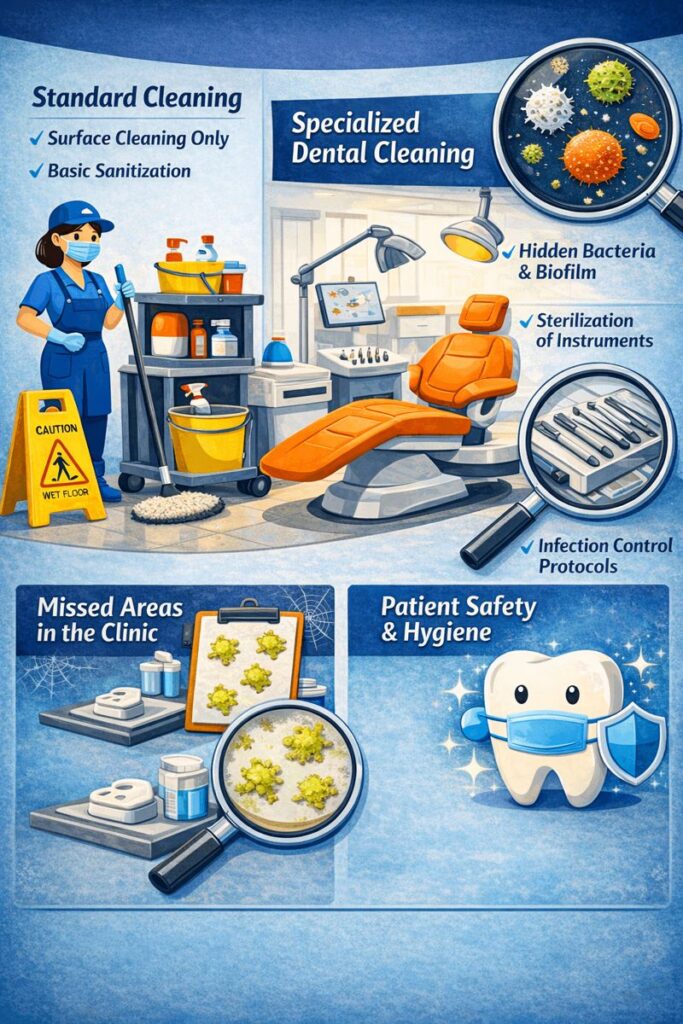
Dental clinics witness constant risk of exposure to biological contaminants due to their proximity to patient contact, frequent surface interaction, and aerosol-generating procedures. Infection control relies on both clinical practices and environmental cleanliness, supporting patient as well as staff safety. Equipment, surfaces, and shared spaces form the common vectors for contamination when cleaning approaches fail to address specific healthcare risks.
Similarly, dental clinics operate under strict health and safety expectations demanding thorough documented procedures, controlled use of chemicals or equipment, and trained personnel. Specialized cleaning of dental clinics meets these requirements, besides reducing the risk of infection, maintaining compliance, and establishing trust across clinical care spaces.
Unique Cleaning Challenges in Dental Clinics
Dental clinics are extremely different from any other standard commercial spaces, considering their service nature. Aerosols generated during the treatment settle across the surrounding equipment and surfaces, which elevates the risk of contamination across the clinic. The common challenges included here are:
- Exposure to saliva, blood, and microorganisms
- High patient turnover throughout the day
- Tight clinical layouts with shared equipment
- Sensitive dental technology requires careful handling
Standard cleaning approaches emphasizes on visible dirt, besides any microscopic hazards. Specialized dental cleaning addresses contamination that is not visible but poses significant health risks. Strategies featured in how commercial cleaning specialists plan and execute detailed cleaning demonstrate best practices that can be adapted for dental clinic hygiene programs.
Importance of Cross-Contamination Prevention
Cross-contamination happens when pathogens transfer between tools, surfaces, patients, and staff. Dental clinics encounter a greater risk due to frequent contact with high-touch areas as well as shared spaces. Highly effective prevention involves the following:
Controlled Cleaning Workflows
Cleaning across workflows moves logically from low-risk to high-risk areas, in addition to the use of dedicated supplies and tools. Shared equipment or inappropriate sequencing elevates the risk of contamination. Primary controls include:
- Separation of clinical and non-clinical cleaning tools
- Clear task sequencing
- Proper storage and handling of cleaning supplies
These approaches aligns to the recognized occupational health as well as safety principles.
Training and Hazard Awareness
Commercial cleaners should understand the dangers existing in dental clinics. Considerable knowledge of biological exposure, safety in the use of chemicals, and personal protective equipment is the key to safer performance. Expertly structured training supports:
- Consistent cleaning outcomes
- Reduced incident risk
- Compliance with health and safety expectations
Professionally trained teams directly contribute to safer dental clinic spaces.
Dedicated Tools for Infection Control
Dental clinics involve stringent control over cleaning tools, preventing biological transfer between spaces. Insights shared on how your medical clinic benefits from professional cleaning further underscore the importance of healthcare-aligned hygiene practices for dental clinics. Effective practices for tool management include:
- Tool separation across clinical and non-clinical areas
- Clear labeling or color coding for task-focused use
- Proper inspection of tools before use
- Appropriate cleaning and storage post every shift
- Immediate replacement of damaged or contaminated tools
Dedicated tool control eliminates the risk of contamination, which supports consistent safety outcomes across the dental clinics.
Ongoing Hazard Assessments
Dental clinics are exposed to fluctuating risks that rely on procedures, placement of equipment, and patient volume. Ongoing risk assessments allow risk identification sooner and proper control before the cleaning activities initiate. The most effective risk assessment practices involve:
- Daily review of work areas and tasks
- Identification of biological, chemical, and physical hazards
- Adjustment of cleaning methods when conditions change
- Communication of hazards to cleaning personnel
- Documentation of identified risks and controls
Ongoing risk assessment strengthens safety planning, reducing potential incidents across the dental clinics.
High Touch and High Risk Areas in Dental Clinics
Dental clinics comprise several high-touch surfaces that are often overlooked by standard cleaners. Such areas need meticulous attention since they are touched repeatedly by patients and staff daily.
Clinical Areas & Operatories
Areas include:
- Dental chairs and armrests
- Overhead lights and adjustment handles
- Instrument trays and countertops
- Suction controls and equipment panels
These areas get exposed to bodily fluids and aerosols that should be cleaned with approved disinfectants with the right contact times. Specialized support like medical and healthcare cleaning services ensures that operatories, equipment, and patient areas are disinfected, staying compliant with industry standards.
Reception & Waiting Areas
Areas include:
- Front desks and payment terminals
- Door handles and light switches
- Seating and armrests
- Children’s play areas (if applicable)
Although these areas may not appear “clinical,” but serves as entry points for pathogens entering or leaving the facility.
Staff & Support Areas
Areas include:
- Break rooms and shared appliances
- Locker rooms and storage areas
- Washrooms and handwashing stations
Lack of adequate protocols can trigger contaminants to seamlessly move between clinical and non-clinical spaces.
Compliance with Health & Safety Standards
Dental clinics operate under stringent regulatory oversight. Infection prevention and workplace safety are governed through health authorities, occupational health & safety legislation, as well as professional standards. Before deep cleaning or disinfection, facility pre-cleaning and sanitation services prepare the space to meet infection control and safety standards.
Commercial dental cleaning services can help clinics stay compliant by:
- Following documented cleaning procedures
- Using approved chemicals and safety data sheets
- Training staff in hazard recognition and PPE use
- Maintaining records for inspections and audits
- Implementing incident reporting and corrective actions
At Emerald Caretakers Ltd., we operate with a strong safety culture, prioritizing:
- Competent, trained personnel
- Proper PPE selection and inspection
- Chemical safety and WHMIS compliance
- Incident prevention, reporting, and investigation
- Continuous review of safety plans and procedures
This proactive approach ensures that the cleaning is effective and defensible during inspections.
Why Professional Dental Cleaning Services Matter
General cleaning services are never designed for healthcare risk environments. Dental clinics benefit considerably through professional janitorial cleaning solutions that use daily hygiene and advanced risk-controlled cleaning procedures. Professional dental cleaning services offer:
- Healthcare appropriate cleaning protocols
- Trained personnel familiar with clinical hazards
- Controlled use of chemicals and equipment
- Ongoing assessments and supervision
- Accountability through documented safety practices
This service level safeguards staff, patients, and clinical operations, besides supporting long-term industry compliance.
Why Emerald Caretakers Ltd Is the Right Choice
Dental clinics need experienced commercial cleaning crews who understand the healthcare risks, infection control standards, and safety obligations. Emerald Caretakers Ltd offers specialized cleaning that is supported by expert personnel, structured safety programs, and continuous risk monitoring. This approach can safeguard patients, support staff’s safety, and help the dental clinics to stay compliant, confidently focusing on delivery quality care.
Contact us today to book a professional dental clinic cleaning assessment. Allow our experts to assess your facility, identity risks, and create an effective cleaning solution that is designed uniquely for dental spaces.
Frequently Asked Questions
How often should dental clinics schedule professional cleaning?
To ensure regular hygiene and professional presentation, dental clinics usually need to be cleaned daily with some deep cleaning on a regular basis, depending on the number of patients, procedures done, and operating hours.
Can cleaning be scheduled outside clinic hours?
Dental clinics can book cleaning during off-hours or when the traffic is minimal to limit the interference with patient care and, at the same time, clean the operatories, reception areas, and support spaces properly.
Does specialized cleaning affect patient perception?
Dental clinics whose clean and well-maintained areas are visible develop more trust in patients, greater comfort levels, and enhanced professionalism, which positively affect patient trust and retention.