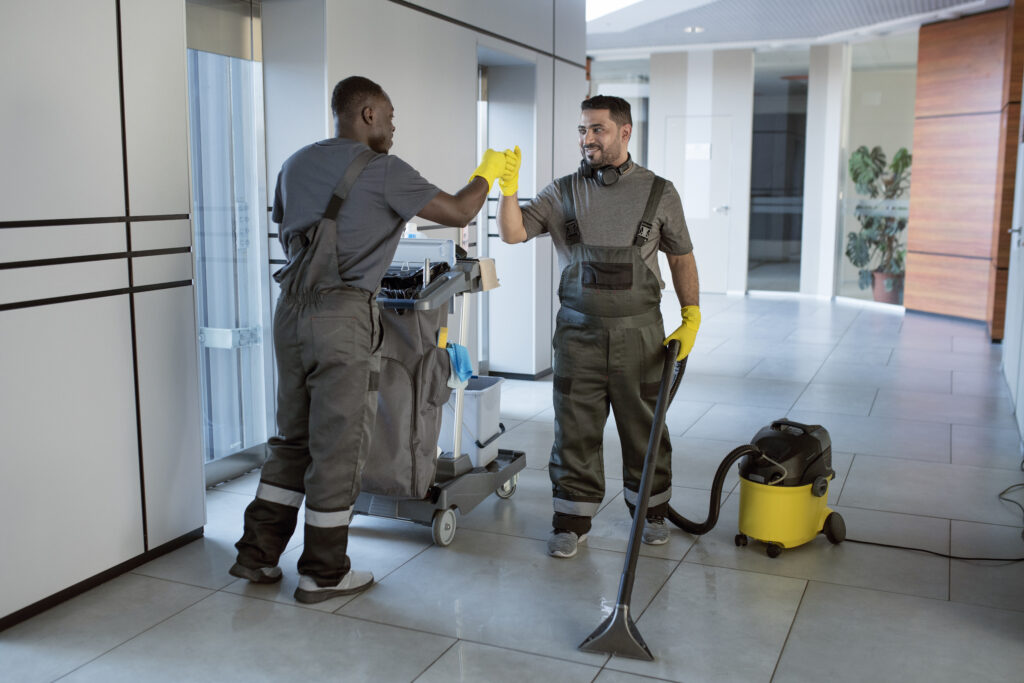
Health & Safety Isn’t a Policy at Emerald — It’s How We’ve Worked for Decades
-
Post By
-
Wednesday
January 14, 2026

Health and safety are non-negotiable at workplaces, educational institutions, retail outlets, and all other facilities. In the post-COVID era, businesses and institutions cannot view it solely through a compliance checklist. It’s about consistency, accountability, culture, and creating an environment that is safe, productive, and healthy for everyone. While regulations provide the framework, it is important to move beyond them and focus on a workplace health and safety culture that prioritizes lives and safety above all else.
At Emerald Caretakers Ltd., workplace health and safety culture is not just a job, it is a mindset. It is not merely about fulfilling the tasks on the checklist but creating an environment that leaves no room for complacency. For decades, we have worked with our clients to build safety systems tailored to their specific challenges. Here’s why Emerald is a trusted name and has built lasting partnerships in a competitive space.
Moving Beyond Compliance — What Real Workplace Safety Looks Like
Some businesses and janitorial service in GTA providers view workplace safety only through the lens of compliance. While this may help meet regulations, it often fails to address the specific safety risks and hazards present within a facility. At Emerald, we believe workplace health and safety should go beyond minimum standards. Rather than taking a shortcut approach, we focus on building a strong, reliable safety system that leaves no room for error.
Compliance Is the Baseline, Not the Goal
Workplace safety regulations continue to evolve to address the challenges that we face. For instance, the COVID-19 pandemic was a wake-up call that changed many of our perspectives and approaches to safety and sanitation. Depending on your industry and hazards, you must adopt a tailored approach to health and safety. From OSHA requirements to construction and industrial standards, your organization needs to keep pace with changing rules, technologies, and risk profiles. We treat compliance as the baseline and not the goal.
Our safety programs are designed to stay ahead of regulatory changes, rather than reacting to the update. This proactive approach ensures that policies, procedures, and training remain relevant to real-world conditions. We don’t believe in forcing people to adapt to rigid systems; instead, we focus on tailoring safety programs to suit different facilities, projects, and teams. Whether we are undertaking routine maintenance or working in complex industrial environments, we shape our approach based on the actual risks involved.
Why “One-Size-Fits-All” Safety Programs Fail
Your business facility or institution is different from your nearest competitor. The fact is, no two facilities operate the same way, even when they have common ownership. Risk levels vary depending on equipment, environment, workload, and activity type. Even the slightest difference in the size of the property or the number of people there can significantly alter the risk profile. Generic safety programs often overlook these differences, creating gaps between policy and practice. Our approach emphasizes site-specific planning. We believe safety expectations must be tailored to the realities of each workplace rather than burying them in manuals that rarely leave the office. It ensures that safety becomes part of daily operations rather than a separate administrative process. Our approach helps clients to easily identify hazards, communicate concerns, and maintain consistent standards across every site.
Training That Builds Competence — Not Just Certifications
Workplace health and safety culture stands on a strong foundation of training. A well-trained team not only helps with day-to-day health and safety management but can also respond to hazards and emergencies.
Training as a Continuous Process
At Emerald, we treat training as an ongoing process. Certifications such as WHMIS, chemical awareness, and task-specific training provide essential knowledge. But real safety doesn’t stop at the classroom door. We reinforce knowledge through on-site supervision, practical application, and accountability. Instead of focusing on ticking the checklist, the emphasis remains on ensuring people understand risks, procedures, and expectations in real working conditions. It helps workers stay alert to changing hazards and ensures safety practices remain consistent, even as projects evolve.
Competent Supervision Makes the Difference
Effective supervision plays a critical role in workplace safety. Emerald selects supervisors based on experience, regulatory familiarity, and strong risk awareness. It ensures a proactive on-site risk management approach rather than reacting after incidents occur. Supervisors act as the bridge between safety policies and daily operations. Our training helps them guide teams, address concerns early, and maintain clear communication throughout each project. The presence of safety leadership on the site makes teams more confident and keeps them prepared to respond to potential risks.
Documentation That Supports People, Not Paperwork
Treating documentation as mere paperwork and a compliance requirement invites risks and prevents the proper percolation of workplace health and safety culture down to the bottom of the pyramid.
Why Documentation Matters — When Used Properly
Safety documentation serves an important purpose: supporting people in day-to-day operations and dealing with emergencies, not just satisfying requirements. At Emerald, safety plans, manuals, and records are created for informed decision-making. We focus on a culture where documentation is relevant and practical, helping meet evolving challenges. We don’t overwhelm teams with excessive paperwork. Our focus is on clear, relevant information that helps people understand hazards and responsibilities. This approach helps identify trends, improve processes, and protect both workers and facilities.
From Project Planning to Daily Hazard Awareness
As work conditions change, so do the needs for the safety plans. For decades, our approach has ensured that hazard awareness evolves with each project stage. We focus on addressing risks before a facility becomes active, not after issues arise. This proactive focus reduces incidents, improves communication, and builds trust between different stakeholders. We focus on building a culture where safety is a shared responsibility rather than an obligation.
Contractor Safety as a Partnership, not a Transaction
Workplace health and safety culture is not merely a business transaction; it is about building trust for us at Emerald. Over the decades, we have earned the trust of our contractors not just by focusing on checklists, but by building a process that addresses the challenges we face together.
Setting Clear Expectations Before Work Begins
Contractors play an essential role in facility operations, and their safety is a priority equal to that of our team. We set clear expectations right from the word go, with strict pre-qualification and onboarding focused on shared values. It ensures everyone on-site understands their responsibilities and the importance of maintaining a safe working environment. Clear communication at the start of a project helps prevent misunderstandings and ensures consistent safety standards.
High-Risk Work Requires Higher Accountability
Our contractors often work in hazardous environments. Certain tasks carry higher risks, such as working at elevated heights, working on live systems, working in confined spaces, and performing specialized technical operations. Hence, we emphasize preparation and observation during higher-risk activities, treating safety as a shared responsibility, and fostering open communication among supervisors, workers, and contractors. It allows us to identify hazards early and ensure everyone remains focused on protecting both people and facilities.
How Consistent Safety Practices Drive Long-Term Retention
It takes years to build a committed team and trust-driven contractor partnerships. We believe it isn’t just about remuneration but also about sharing responsibility. We take pride in our exceptionally high retention rate, which enables us to deliver on our promises.
People Stay Where They Feel Protected and Respected
At Emerald, long employee tenure isn’t an accident, as we have built it on trust and stability. Our workers know that hazards are identified early, addressed properly, and taken seriously. It builds confidence across the team at all levels.
Stability Through Structure
Our consistent safety systems allow teams to focus on quality work rather than reacting to preventable issues. This approach means fewer incidents and disruptions and has helped us build long-term relationships with our clients.
Experience Is the Real Safety Advantage
If your focus is on building a workplace health and safety culture that meets all the risks as they evolve, we invite you to come on board with Emerald. Decades into this business, our focus has been on helping our clients reap the real safety advantage and create safe places that boost productivity and growth.
Why Emerald’s Approach Can’t Be Copied Overnight
Others have tried copying our approach and failed. Policies can be copied, but not the culture and processes we have built. Our safety practices are the result of decades of refinement. Lessons learned over time about how work is planned, supervised, and executed have helped us reach where we are. These experiences shape decisions, improve processes, and strengthen accountability across all levels.
Conclusion: Safety That’s Lived, Not Just Documented
Health and safety at Emerald are more than just a compliance challenge. It reflects our experience, accountability, and care. We have built strong systems that protect people, improve productivity, and build lasting partnerships. We have built skilled teams and trusted contractors brick by brick, and they have helped us build a brand that at once inspires trust and safety among our clients. Join our ever-growing list of happy clientele and see the difference we can make to your workplace health and safety culture.
Frequently Asked Questions
1. What is workplace health and safety culture?
Workplace health and safety culture is the shared mindset and daily behavior that prioritizes safety across an organization. It goes beyond rules and policies, focusing on how people identify risks, follow safe practices, and take responsibility for one another.
2. Why is workplace health and safety culture important?
A strong safety culture reduces accidents, protects employees, improves productivity, and builds trust. When safety is part of everyday work, organizations experience fewer disruptions and better long-term performance.
3. How is safety culture different from safety compliance?
Safety compliance meets legal requirements, while safety culture reflects how safety is practiced daily. Compliance sets the minimum standard, but culture determines whether safety measures are consistently followed in real working conditions.
4. What are the key elements of a strong workplace safety culture?
Leadership commitment, clear communication, continuous training, effective supervision, hazard awareness, and shared responsibility are the core elements of a strong workplace health and safety culture.
5. How does workplace safety culture improve productivity?
A positive safety culture reduces injuries, downtime, and operational disruptions. When employees feel safe and supported, they can focus on quality work, leading to higher efficiency and consistent performance.