Medical Facility Cleaning: How Professional Services Protect Patients and Staff
-
Post By
-
Tuesday
March 17, 2026

Medical facilities work in environments where cleanliness has a huge direct impact on patient
outcomes, the safety of staff, and regulatory compliance. Every waiting area, treatment room,
and shared surface contributes to the strategies for infection prevention. Environmental
cleaning helps clinical care by eliminating risk exposure that often goes unnoticed.
Healthcare environments demand an implementation of structured safety practices beyond
aesthetics. Well-documented procedures, trained cleaning crews, the use of proper chemicals,
and continuous risk evaluation lay a strong foundation for cleaning medical facilities.
Commercial cleaning services ensure that the activities safeguard people and property, besides
supporting regular operations.
Why Medical Cleaning Is Different from Regular Office Cleaning
Initially, a medical facility might appear identical to any office building, including the floors, desks, shared spaces, and restrooms. But the risks associated with the healthcare spaces are basically entirely different.
Routine office cleaning prioritizes aesthetics, basic hygiene, and overall comfort. Medical facility cleaning emphasizes infection prevention, safety compliance, and risk control. The present of invasive procedures, ill or immunocompromised individuals, and exposure to bodily fluids elevates cleaning from a general maintenance task to a comprehensive clinical support operation. The primary differences include:
- Higher frequency of high-touch surface contact
- Exposure to pathogens absent in standard workplaces
- Implementation of specialized disinfectants instead of general cleaners
- Requirement for documented procedures and accountability
- Strict regulatory oversight
Expert support from medical facility cleaning services assures to retain the cleanline off healthcare environment with the use of procedures crafted to prevent infection and maintain safety compliance.
Risk of Healthcare-Associated Infections (HAIs)
Healthcare-associated infections or HAIs is more of the most severe challenges across the medical environment. Such infections surface whenever harmful microorganisms are transmitted through contaminated surfaces, tools, or shared spaces within a facility.
Although the clinical protocols play an integral part in prevention, environmental cleanliness is equally essential. Pathogens survive across surfaces for extended periods if not disinfected properly. This increases the chances of transmission between staff, patients, and visitors. Such risks are structured through numerous medical office cleaning factors impacting the nature of the spread of contamination across the healthcare spaces.
Expert medical cleaning can help reduce the risk of HAI by:
- Targeting high-risk areas where contamination is most likely
- Using disinfectants proven effective against healthcare-related pathogens
- Following structured cleaning processes that reduce missed surfaces
- Maintaining consistency across shifts and departments
Addressing the key environmental factors, professional cleaning services form the major defensive layer across infection prevention strategies.
Proper Disinfecting vs. Surface Cleaning
Commonly misunderstood aspects behind medical facility cleaning are the real difference between surface cleaning and adequate disinfecting.
Surface cleaning helps to eliminate visible dust, dirt, and debris. Although this is important, it never removes harmful microorganisms. Alternatively, disinfecting implements approved chemical agents for reducing or destroying pathogens microscopically. Expectations like washroom cleaning compliance rules emphasize the reason behind the importance of disinfection standards across shared healthcare spaces.
Expert medical cleaning services highlight this different and implements correctly:
- Pre-cleaning eliminates organic matter to reduce the effectiveness of disinfectant
- Disinfection implements healthcare-focused products with explained contact times
- Targeted application emphasizes high-risk and high-touch surfaces
- Documentation assures that the cleaning tasks will be completed as needed
Specialized cleaning solutions like healthcare disinfection and sanitation emphasizes on eliminating microscopic risks that surface cleaning fails to address.
Cleaning Schedules for Treatment Rooms vs. Waiting Areas
Not every area in a medical facility carries the same risks, necessitating the need for professional cleaning that depends on risk-based scheduling instead of following a one-size-fits-all approach.
Treatment Rooms and Examination Areas
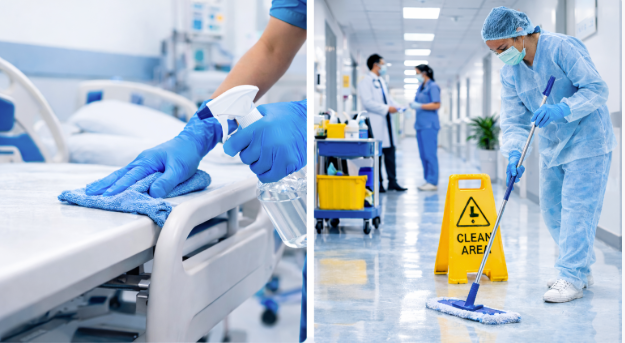
Treatment rooms involves highest level of cleaning considering the direct patient contact and clinical procedures. Cleaning schedules dedicated to these spaces should support infection control, besides aligning with the clinical workflows and needs for safety. Effective cleaning schedules for the treatment room include:
- Cleaning and disinfection after each patient use
- Focus on high-touch clinical surfaces and equipment
- Use of medically approved disinfectants
- Defined task sequencing to reduce contamination spread
- Documentation of completed cleaning tasks
Consistent treatment room cleaning plays a huge role in safeguarding patients and supporting safe care offerings.
Procedure and Diagnostic Spaces
Procedure and diagnostic areas brings higher level of risks due to the use of specialized equipment and invasive activities. Cleaning routines should consider the risks of higher contamination and regulatory expectations. Structured cleaning schedules for these spaces offer:
- Enhanced disinfection following procedures
- Attention to equipment interfaces and work surfaces
- Use of appropriate personal protective equipment
- Controlled chemical application methods
- Verification through documented processes
Targeted scheduling can help maintain safer conditions without compromising medical operations.
Waiting Areas and Reception Spaces
Waiting areas are the primary entry points for both patients and visitors. It creates a consistent exposure through surface contact and high foot traffic. Cleaning schedules should considerably address this continuous risk. The waiting areas’ cleaning schedules include:
- Regular disinfection of seating and armrests
- Frequent cleaning of reception counters and check-in surfaces
- Attention to door handles and light switches
- Increased frequency during peak patient hours
Routine cleaning across the waiting areas supports infection control while reinforcing patients’ confidence.
Administrative and Office Areas
Administrative spaces support regular operations while continuing their contribution to the entire facility’s hygiene. Cleaning schedules for these areas aim to maintain the cleanliness without disrupting the work activities. The right cleaning schedules for the office areas include:
- Daily cleaning of desks and shared equipment
- Disinfection of phones and keyboards
- Regular waste removal
- Scheduled floor and surface cleaning
Keeping the administrative areas hygienic can help prevent indirect contamination from happening in the facility.
Washrooms and Support Areas
Washrooms and support areas involve frequent cleaning due to higher usage and shared access. Cleaning schedules should emphasize hygiene and safety across the spaces. Effective cleaning schedules for the washroom and support areas include:
- Multiple cleanings throughout operating hours
- Disinfection of fixtures and touchpoints
- Proper waste handling and disposal
- Restocking of hygiene supplies
- Ongoing inspection for cleanliness
Consistent cleaning of these support areas eliminates the risk of contamination and supports the safety of the facility.
Importance of Trained, Certified Cleaning Staff
It is found that even the ideal cleaning products and schedules become ineffective due to the lack of properly trained personnel. Medical facility cleaning involves knowledge that goes way past general janitorial work. Expert medical cleaning staff are trained to understand:
- Infection control principles
- Proper handling and disposal of waste
- Safe use of disinfectants and chemicals
- Personal protective equipment (PPE) requirements
- Cross-contamination prevention methods
Certification and ongoing training ensures to keep the cleaning teams are updated with the evolving healthcare standards and best practices. Experts offering commercial cleaning compliance support can help medical facilities to maintain documented procedures, trained staff oversight, and inspection readiness.
Trained professionals are not just responsible for cleaning; they actively contribute to the safety culture of the facility.
Request a Medical-Grade Cleaning Plan
Medical facilities need effective cleaning solutions crafted uniquely to address healthcare risks and not just adapt from office environments. Professional medical facility cleaning services offer structured, compliant, and risk-based solutions, safeguarding patients and staff daily.
If your facility is depending on standard cleaning approaches, it is the right time for reassessing. A medical-grade cleaning plan from experts like Emerald Caretakers Ltd effectively identifies the risk areas, enhances infection control, and ensures that your facility is aligned with the safety and care standards.
Request a quote today to take a proactive step to safeguard individuals who matter the most, especially your patients and staff!
Frequently Asked Questions
How does professional medical cleaning reduce infection risks?
Professional cleaning removes pathogens that are harmful with the help of medical-grade disinfectants, trained processes, and regular schedules of risk-based cleaning.
Why can’t regular office cleaners clean medical facilities effectively?
Medical settings need special training, approved disinfectants, strict guidelines, and awareness of the risks of healthcare infection.
How often should treatment rooms be professionally cleaned?
Between patients, only a cleaning of the treatment rooms is necessary, and a deeper disinfection is scheduled.