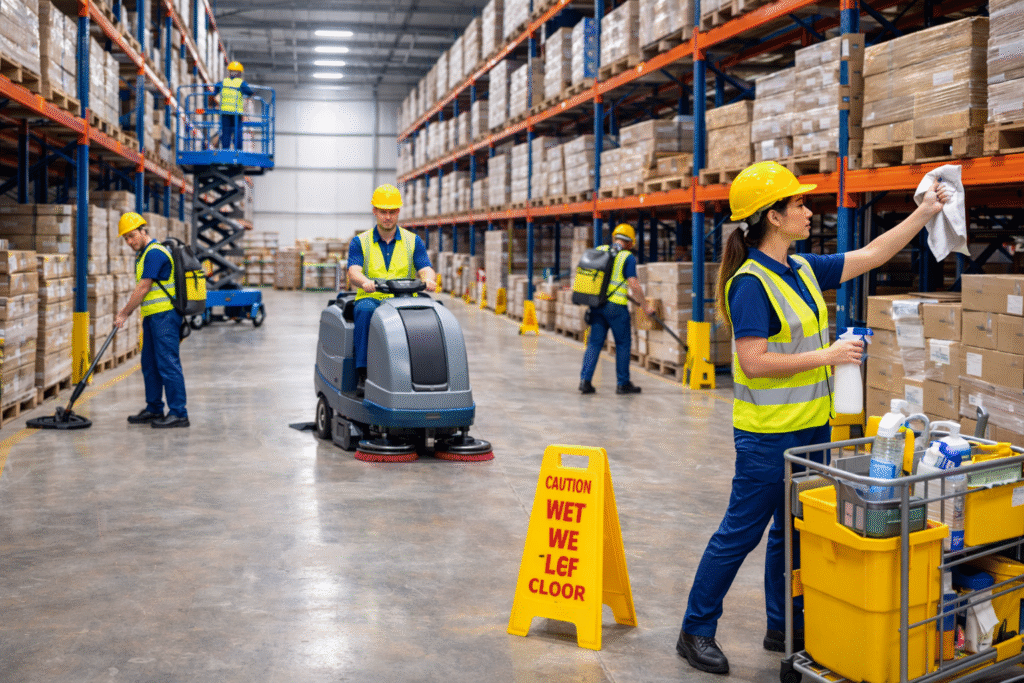
Warehouse Cleaning: Improving Safety, Productivity, and Compliance
-
Post By
-
Friday
February 20, 2026

How safe, productive, and inspection-ready is your warehouse right now? In facilities where forklifts move constantly, inventory turns over fast, and deadlines leave little room for error, even minor buildup can have major consequences. Dust reduces traction, debris blocks travel paths, and warehouse dust buildup along with clutter around docks quietly increases risk.
High-performing operations depend on environments that workers can rely on. Clear floors help equipment run smoothly. Organized spaces prevent delays. Controlled conditions make compliance easier to maintain. This is why professional warehouse cleaning plays such a critical role, it supports the people, processes, and standards that keep business moving forward.
When cleanliness becomes part of the strategy rather than a reaction, warehouses operate with greater confidence, fewer disruptions, and stronger results.
In this blog, we will unpack the real challenges warehouses face, why cleanliness matters for safety and performance, and how a proactive strategy can transform your facility from a chaotic zone to a confident, compliant hub.
Common Warehouse Cleanliness Challenges
Warehouses are complex, fast-moving environments, and maintaining consistent cleanliness requires more than occasional attention. Several factors make these facilities uniquely difficult to manage.
- Constant traffic and operational activity
Unlike smaller commercial buildings, warehouses rarely slow down. Forklifts, pallet jacks, and foot traffic continue throughout the day, moving dirt and debris from one area to another. As materials travel, contamination spreads quickly, making it harder to isolate and resolve problems before they grow. - The sheer size of the facility
Square footage alone presents a major obstacle. Cleaning tens of thousands of feet of concrete cannot be approached the same way as maintaining an office or retail space. Dust settles across long aisles, particles collect on racks, and waste may remain unnoticed simply because the environment is so large. - Continuous introduction of outdoor elements
Each delivery brings more than inventory. Trucks, shoes, and equipment carry in mud, moisture, salt, and exhaust residue. Without a structured plan, these materials accumulate rapidly, affecting traction, air quality, and overall safety. - High-traffic zones that cannot pause
Loading docks, staging areas, and packing stations gather grime faster than the rest of the building. However, these are also the most operationally sensitive spaces. Shutting them down for cleaning is difficult, which often leads to postponement and heavier buildup. - Hard-to-reach vertical and storage areas
Dust does not remain at ground level. It collects on beams, lights, vents, and high shelving where routine janitorial methods may not reach. Specialized equipment and trained personnel are usually necessary to address these zones safely and effectively.
When challenges like these are left unresolved, the impact goes beyond appearance. They begin to slow workflows, increase risk, and reduce overall operational reliability.
Dust, Debris, and Slip Hazards – The Hidden Risks
When someone hears “dust,” they may think it is a minor nuisance. In a warehouse, though, dust and debris are silent productivity killers.
Standard sweeping may remove the obvious dirt, but fine particles cling to surfaces and machinery. This buildup can affect air quality and outdoor contaminants, like mud and moisture, create slick spots that are not visible until someone slips. According to industry insights, warehouses struggle with slip and fall hazards precisely because of dust, debris, and inadequate cleaning protocols.
Debris from packaging, like plastic bands, cardboard scraps, and broken pallets, may seem insignificant. But for forklifts and pedestrian traffic, these small bits pose real danger. Tires roll over them, shifting them into pathways, and workers can trip or lose footing. Without systematic cleaning, these hazards multiply especially in high-traffic zones where people and machines are constantly passing.
The approach needs more than quick fixes. Strategic cleaning plans that focus on early identification of hazards and immediate removal of debris make warehouse spaces safer and more manageable daily.
Floor Cleaning for Forklifts & Heavy Equipment
Walk into any active warehouse and you will notice something clear: the floor takes a beating. It is not just a surface, it is the backbone of internal logistics.
Forklifts, pallet jacks, and heavy equipment create constant wear. Tire marks, oil residues, and embedded grime degrade concrete surfaces. If left untreated, these conditions can compromise traction, slow down transport routes, and cause early wear on machine components.
Industrial floor cleaning is more than sweeping. High-performance scrubbers and sweepers clear away stubborn dirt, while degreasing agents break down oil and other residues that attract more dust over time. Keeping these surfaces consistently clean allows equipment to operate with greater efficiency and reduces the risk of mechanical damage or unexpected breakdowns.
Clean floors also support visual cues, like safety lines and pathways, that workers rely on to navigate safely. Without clear marking and smooth surfaces, workers may misjudge distances or step into hazardous zones.
Cleaning Loading Docks and Storage Zones
Loading docks tell the story of a warehouse’s busiest transitions. Trucks pull up, cargo gets passed through, and outdoor grime makes its way inside. Because these zones are gateways between external and internal operations, they require special attention.
Most warehouse mishaps start at the dock, slick surfaces from rainwater tracked in, piles of discarded packing materials, or even mud and debris spreading inward from the yard. Left unattended, these conditions slow operations and increase slip hazards. Regular sweeping, pressure washing, and dock area maintenance are essential.
Storage zones also need focused cleaning strategies. High shelving and tight rack spaces can be magnets for dust buildup, which affects air quality and can settle on stored goods. Over time, a neglect of these spaces means increased risk of product damage, inventory errors, or even violations during inspections.
Cleaning these areas is not merely about tackling dirt, it is about creating order. Order leads to faster picking, fewer obstacles in daily workflows, and a professional space that supports staff performance rather than hindering it.
How Regular Cleaning Reduces Workplace Accidents
Smooth operations are built on environments where people feel safe. Warehouses have inherent risks, heavy equipment, high shelves, fast-paced movement, and cleanliness plays a central role in reducing those risks.
Research shows that continuous housekeeping practices directly reduce incidents like slips, trips, and falls. Clearing pathways, maintaining dry floors, and eliminating clutter ensures that workers do not have to dodge hazards every time they navigate the space.
But it’s not only physical hazards. Dust and airborne particles can impact respiratory health and cause discomfort that distracts workers from their tasks. A cleaner facility improves air quality, which helps maintain focus and overall well-being across shifts.
Another dimension is regulatory compliance. Warehouses must meet specific health and safety standards, and auditors look closely at cleanliness practices. Regular documentation, scheduled cleaning tasks, and visible maintenance logs demonstrate a commitment to safety and can make inspections less stressful and more successful.
Reducing workplace accidents does not just protect employees, it protects productivity, morale, and the company’s reputation.
Get a Customized Warehouse Cleaning Quote
No two warehouses are the same. Traffic patterns, equipment types, seasonal variables, every facility has its own story. That is why a one-size-fits-all cleaning plan rarely works.
Emerald Caretakers listens, assesses, and builds cleaning strategies that fit your warehouse’s unique needs. Whether your priority is safety, productivity, compliance, or all three, the right plan makes it easier to reach your goals.
Faqs
1. Why is warehouse cleaning important for safety and compliance?
Warehouse cleaning is essential because it directly reduces slip-and-fall risks, improves air quality, and helps maintain OSHA and industry safety standards.
Dust, debris, oil spills, and cluttered walkways increase workplace accidents and equipment damage. Regular industrial cleaning keeps floors dry, removes hazardous buildup, and ensures safety markings remain visible.
A clean warehouse is also inspection-ready, which makes audits smoother and protects businesses from costly fines or violations.
2. How often should a warehouse be professionally cleaned?
Most warehouses benefit from daily maintenance cleaning and scheduled deep cleaning weekly or monthly, depending on traffic and operations.
High-traffic areas such as:
- Loading docks
- Forklift lanes
- Packing and staging zones
may require more frequent attention. Facilities with heavy machinery, high inventory turnover, or exposure to outdoor elements typically need a structured, ongoing cleaning plan rather than occasional service.
3. What are the biggest cleaning challenges in warehouses?
The most common warehouse cleaning challenges include:
- Constant forklift and foot traffic spreading debris
- Large square footage that makes issues harder to detect
- Mud, moisture, and salt tracked in from deliveries
- Hard-to-reach high shelving and ceiling beams
- Busy loading docks that cannot pause operations
Without a proactive cleaning strategy, these challenges lead to safety hazards, reduced productivity, and faster equipment wear.
4. How does professional warehouse floor cleaning improve productivity?
Clean warehouse floors improve productivity by:
- Enhancing forklift traction and reducing breakdowns
- Preventing slips, trips, and downtime from accidents
- Protecting concrete from long-term damage
- Keeping safety lines and pathways clearly visible
Industrial scrubbers, sweepers, and degreasing solutions remove embedded grime that standard sweeping misses. When floors are properly maintained, equipment runs more smoothly and workflows stay uninterrupted.
5. What should a customized warehouse cleaning plan include?
An effective warehouse cleaning plan should include:
- Routine sweeping and industrial floor scrubbing
- Loading dock cleaning and pressure washing
- High-dusting of racks, beams, and vents
- Debris and waste removal from storage areas
- Scheduled deep cleaning for compliance readiness
A customized plan considers facility size, traffic levels, equipment use, and seasonal conditions. This ensures the warehouse remains safe, efficient, and audit-ready year-round.